
Business World, 3 July 2014
 OVER the past 10 years, the Philippines has recorded a steady -- and alarming -- rise in the number of cases of HIV-AIDS. According to UNICEF, while the prevalence of human immunodeficiency virus (HIV) and acquired immune deficiency syndrome (AIDS) in the country is still low, there was a 79% increase in the number of newly reported cases in 2013 compared to 2012.
Dr. Rossana A. Ditangco, head of the AIDS research group of the Research Institute of Tropical Medicine (RITM) said that there are now 14 new infections a day -- roughly one person is infected with HIV every two hours.
Alt Media, 3 July 2014
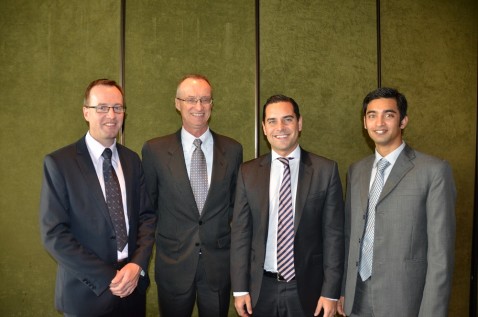 On Wednesday, June 18th, David Shoebridge MLC of the NSW Greens and Alex Greenwich, Independent Member for Sydney, co-hosted a fundraiser to support Sydney's HIV/AIDS Legal Centre.
"The HIV/AIDS Legal Centre provides an essential missing link in legal advocacy. For well over a decade it has been fighting discrimination in public health," Mr Shoebridge said.
The centre's Principal Solicitor, Indraveer Chatterjee also highlighted the importance of tackling discrimination surrounding HIV and AIDS.
Science 2.0, 2 July 2014
How do you shape your hopes, ambitions and expectations when growing up in an environment devastated by HIV/AIDS?
For her doctoral thesis, epidemiologist Ellen Blommaert looked for answers in Winam, a rural area of western Kenya where HIV/AIDS wreaked havoc among the population but where sexuality is very important. She found that young people between 16 and 25 do modify their approach to sexual risks - but not in ways the western world understands. Sexuality plays an important role in their quest for a better future but because of the instability of social networks due to HIV and other factors, some of the youngsters increase their sexual networks, including, sometimes, sexual liaisons with multiple, concurrent partners.
Harapan Rakyat, 2 Juli 2014
 Banjar, (harapanrakyat.com),- Guna memberikan informasi kepada masyarakat umum tentang HIV-AIDS, Komisi Penanggulangan AIDS Daerah (KPAD) Kota Banjar, membuat mural atau lukisan dinding di 10 titik yang tersebar di empat kecamatan.
Menurut Pengelola Program KPAD Kota Banjar, Rudi Ilham, bahwa pembuatan mural di 10 titik bertujuan agar masyarakat paham dan tahu kalau HIV itu bukan penyakit kutukan, atau penyakit turunan yang bisa dengan mudah ditularkan.
Supported by

© 2026 Kebijakan AIDS Indonesia