
- Detail
- Kategori: Berita Media (News)
- Dilihat: 4070
Detik News, 22 Juli 2014
 Jakarta, AIDS (Acquired Imunodeficiency Syndrome) masih menjadi momok bagi banyak orang, di samping berbagai nama penyakit baru atau lama dan langka yang jumlah penderitanya terus bertambah. Namun baru-baru ini WHO merilis laporan, jumlah kasus AIDS dan kematian akibat sindrom ini diprediksi akan menurun dalam beberapa tahun ke depan.
Dalam laporan yang sama tercatat kini ada 35 juta orang di penjuru dunia yang hidup dengan HIV (Human Imunodeficiency Virus). Di tahun 2013, jumlah ini meningkat dengan munculnya 2,1 juta kasus baru. Namun angka ini menunjukkan adanya penurunan kasus baru sebesar 38 persen, terutama bila dibandingkan dengan penambahan kasus baru yang tercatat di tahun 2001 yang mencapai 3,4 juta kasus.
- Detail
- Kategori: Berita Media (News)
- Dilihat: 4319
Dawn, 22 July 2014
 KARACHI: Human Immunodeficiency Virus/Acquired Immunodeficiency Syndrome (HIV/Aids) is claiming more lives in Pakistan than ever, says a first-of-its-kind analysis of trend data from 188 countries released on Monday.
There has been an 11 per cent increase in mortality rates from HIV/Aids in Pakistan, according to the study that examines data from 2000 to 2013. However, it reports a decline in the death rates from tuberculosis (TB) and malaria in Pakistan since 2000, when the Millennium Development Goals (MDGs) were established to stop the spread of these diseases by 2015.
Published in The Lancet, the study Global, regional, and national incidence and mortality for HIV, tuberculosis, and malaria during 1990-2013: a systematic analysis for the Global Burden of Disease Study 2013 was conducted by an international consortium of researchers led by the Institute for Health Metrics and Evaluation (IHME) at the University of Washington.
- Detail
- Kategori: Berita Media (News)
- Dilihat: 3519
All Africa, 21 July 2014
HIV/Aids, one of Africa's biggest killer, may be no more or will be under control in the next 20 or so years if medication is availed to everyone infected and awareness spread, statistics show.
A report by the United Nations Aids Agency states that the number of new HIV infections and deaths have reduced, this is however not the general picture because some people still lack access to the much needed medication.
- Detail
- Kategori: Berita Media (News)
- Dilihat: 3274
Health24, 21 July 2014
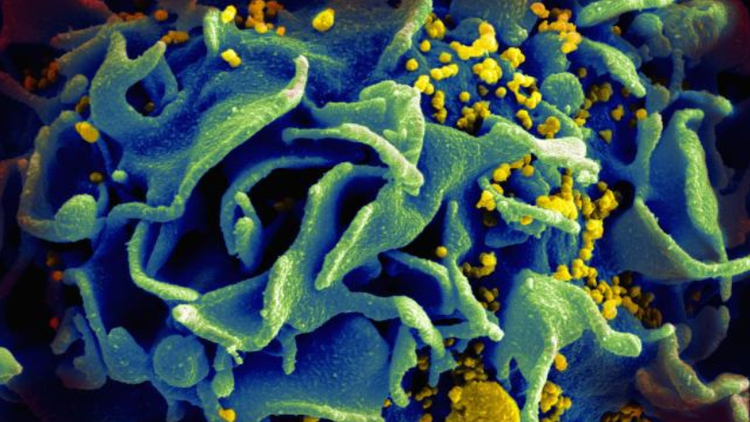 July has been a particularly trying month for HIV/AIDS researchers as they mourned the loss of colleagues killed in a militant attack and received new reports of the virus' remarkable tenacity.
On Monday, a study published in Annals of Internal Medicine found that two HIV patients who were given "new" immune systems in the form of bone marrow transplants suffered renewed HIV infection after initially testing negative for the disease.
Publication of the study follows news this month that the so-called Mississippi baby recently tested positive for HIV. The child, who was born to an infected mother, was placed on antiretroviral drugs just 30 hours after birth and was believed to have been "functionally cured" of the disease. In reality, she had been infected all along.
- Detail
- Kategori: Berita Media (News)
- Dilihat: 3339
Kinggwood News, 20 July 2014
In 2012, Dr. Timothy W. Sloan generated headlines about an issue most churches refuse to discuss, HIV/AIDS, by not only leading an initiative but also getting a rapid HIV test in front of his congregation of 5,000 members. Today, Sloan is still making efforts to bring awareness to this issue by forming a partnership with his church, St. Luke Missionary Baptist Church of Humble (aka The Luke) and with Believers World Outreach (BWO). Through the efforts of this partnership they will be sending a team of six missionaries from their church that includes Jotina Buck, Ashley Buchanan, Amber Smith, Joy Lee, Debra Montgomery and Selma Washington to Cape Town, South Africa for two weeks from July 27 — Aug. 10 to provide relief and support for one of the largest regions affected by the HIV/AIDS epidemic.





Informasi
 |
 |
 |
 |




© 2026 Kebijakan AIDS Indonesia