
- Detail
- Kategori: Berita Media (News)
- Dilihat: 3877
Blog AIDS 2014, 21 July 2014
 MELBOURNE, Australia—Using maps to understand spatial patterns in disease epidemics is nothing new. Nineteenth century epidemiologist John Snow’s cholera map was a game-changer, allowing him to trace cholera’s devastating path at the most granular, household level. Within the HIV field, multi-colored push pins and paper maps were being used just a few years ago to identify the location of existing health facilities in order to inform where facilities were still needed in order to increase coverage and inform strategic planning.
But gone are the days when maps existed in folded accordion rectangles, purchased from a book store or buried within the pages of an atlas. Today, anyone with a smart device—a phone, a tablet, a computer—can view a street-level map of virtually any location on earth.
- Detail
- Kategori: Berita Media (News)
- Dilihat: 3926
Blog AIDS 2014, 20 July 2014
 After two years of planning and preparation, the International AIDS Conference is around the corner. The International Community of Women living with HIV [ICW] has several dynamic women presenting at; plenary sessions, symposia, workshops and the cultural program. The Women's Networking Zone [WNZ], a space open to the public, will have an exciting program of presentations by speakers, from every corner of the globe, addressing access to treatments and services, sexual and reproductive rights, discrimination and violence, and criminalization and justice.
Young women living with HIV will address both the opening and closing plenaries, with Ayu Oktariani from Indonesia, backed by thirty people from the Asia-Pacific region in traditional dress, welcoming delegates on behalf of the community, and Violent Banda from Malawi, a young woman born with HIV, taking the banner for the community onto the next conference in Durban in 2016.
- Detail
- Kategori: Berita Media (News)
- Dilihat: 4691
JPNN, 20 Juli 2014
SURABAYA – Pasca penutupan lokalisasi Dolly-Jarak, Pemkot Surabaya dihadapkan pada pekerjaan besar untuk memantau penderita HIV/AIDS. Semua instansi dikerahkan untuk tetap mengendalikan penularan penyakit berbahaya itu dari berbagai sisi.
Langkah utama pemkot adalah menggerakkan 62 puskesmas yang tersebar di seluruh Surabaya. Tenaga medis di puskesmas itu telah dibekali kemampuan dan peralatan untuk mendeteksi penyakit HIV/AIDS. Mereka akan secara aktif mencari orang-orang yang diduga menderita penyakit tersebut. "Petugas bisa mendatangi orang yang dicurigai dan mengetesnya," kata Kepala Pengendalian Masalah Kesehatan Dinas Kesehatan Surabaya dr Mira Novia, Sabtu (19/7).
- Detail
- Kategori: Berita Media (News)
- Dilihat: 2993
Medical Xpress, 19 July 2014
Among heterosexual African couples in which the male was HIV positive and the female was not, receipt of antiretroviral pre-exposure preventive (PrEP) therapy did not result in significant differences in pregnancy incidence, birth outcomes, and infant growth compared to females who received placebo, according to a study in the July 23/30 issue of JAMA, a theme issue on HIV/AIDS. The authors note that these findings do not provide a definitive conclusion regarding the safety of PrEP therapy prior to pregnancy. The issue is being released early to coincide with the International AIDS Conference.
Antiretroviral pre-exposure prophylaxis as daily oral tenofovir disoproxil fumarate (TDF) and co-formulated emtricitabine/tenofovir disoproxil fumarate (FTC+TDF) has been demonstrated to be efficacious for the prevention of human immunodeficiency virus (HIV) acquisition in diverse populations. PrEP could be an important component of safer conception strategies for women at risk for HIV infection, including those in HIV-serodiscordant couples (i.e., in which only one member is HIV infected), but the effect on pregnancy outcomes is not well defined, according to background information in the article.
- Detail
- Kategori: Berita Media (News)
- Dilihat: 3781
USA Today, 20 July 2014
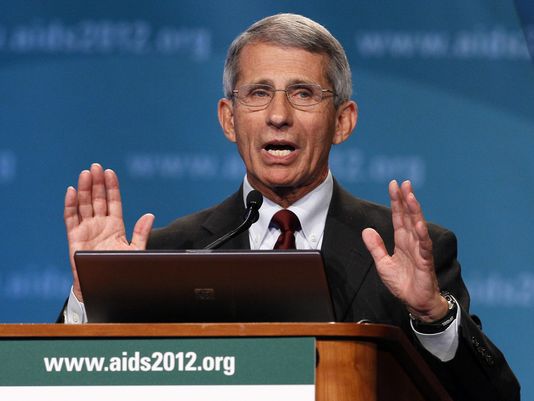 With widespread numbers of HIV patients in treatment, researchers and advocates are talking at this week's International AIDS Conference in Melbourne, Australia, about finally reversing the pandemic.
"At this point, even without a vaccine and a cure, we have the tools," said Anthony Fauci, an immunologist and long-time head of the National Institute of Allergy and Infectious Diseases. "We can sharply deflect the curve of HIV incidence."
Earlier this month, the World Health Organization recommended that medication should be considered a prevention tool alongside condoms for those at high risk for HIV, the virus that causes AIDS.





Informasi
 |
 |
 |
 |




© 2026 Kebijakan AIDS Indonesia