
- Detail
- Kategori: Berita Media (News)
- Dilihat: 5736
Oke Zone, 18 Agustus 2014
 PENYAKIT tuberkulosis (TB) selalu dikaitkan dengan masyarakat kalangan ekonomi menengah-bawah. Namun, bukan berarti masyarakat dengan ekonomi menengah ke atas tidak bisa terkena tuberkulosis.
Menurut Dr Soewarta Kosen selaku Koordinator Ekonomi Kesehatan & Unit Analisis Kebijakan dari Kementerian Kesehatan RI, tuberkulosis memang identik dengan kalangan ekonomi menengah ke bawah. Biasanya, penyakit tersebut disebabkan oleh kuman dan sirkulasi udara yang buruk di rumah. Paling parah, penyakit tuberkulosis merupakan komplikasi HIV.
"Kalau pada orang kaya biasanya kombinasi dengan HIV. Di Indonesia ada kasusnya, tetapi belum tahu angka pastinya HIV dan TB yang menjadi satu itu," katanya di Menteng, Jakarta Pusat, baru-baru ini. (Baca: Selain Ebola, Inilah Lima Virus Mematikan di Dunia)
- Detail
- Kategori: Berita Media (News)
- Dilihat: 4247
UU World, 18 August 2014
 In more than 30 states, being HIV-positive can land you in prison under certain circumstances—if you spit on someone, say, or have sex without revealing your HIV status, even when the chances of transmitting the virus are negligible and the other person never gets it.
Iowa has taken the lead in repealing scientifically outdated criminal laws related to HIV status. Several Unitarian Universalists have been instrumental in huge victories there in recent months, including unanimous passage of a new statute that reflects modern understanding of HIV transmission. These UUs helped focus attention on the 25-year prison sentence of an HIV-positive Iowa man who infected no one, and, in June, they helped organize the first national conference on decriminalizing HIV, which drew people from 40 states, Canada, Great Britain, and Puerto Rico.
- Detail
- Kategori: Berita Media (News)
- Dilihat: 4946
the Jakarta Globe, 18 August 2014
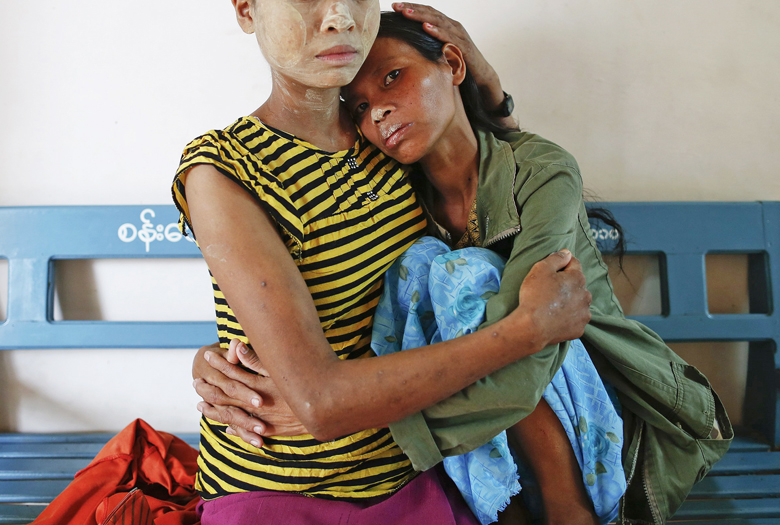 Jakarta. Activists have blamed an ineffective health awareness campaign and ignorance about risky sexual behavior for the double-digit increases in HIV/AIDS infection and mortality rates in Indonesia since 2000, even as the global averages dropped.
Indonesia had an HIV/AIDS incidence, or number of cases, of some 45,000 in 2013, and 14,400 deaths that same year, according to a study by the US-based Institute for Health Metrics and Evaluation published last month in the British medical journal The Lancet.
Those figures were up 28 percent and 87.5 percent respectively from 2000. During the same period, by contrast, the global HIV/AIDS incidence decreased by 3.9 percent and deaths declined by 1.5 percent.
- Detail
- Kategori: Berita Media (News)
- Dilihat: 4001
New Vision, 17 August 2014
Key interventions have seen paediatric HIV infections through mother-to-child transmission reduce significantly over the last two years, a senior doctor has said.
The number of Ugandan HIV-positive mothers who pass on the virus to their unborn babies has reportedly dropped from 40% to 2% within a very short time.
If that does not sound cool enough, how about this: Dr. Backline Balungi Kanywa, the manager of medical care at Baylor College of Medicine children's foundation-Uganda, says that if men were fully involved in the HIV/AIDS prevention campaign, that 2% statistic would in fact be no more!
- Detail
- Kategori: Berita Media (News)
- Dilihat: 3779
Times of Swaziland, 17 August 2014
 MBABANE – Government plans to spend over E3.2 billion in five years on a new venture known as the 'test and treat' programme. The Times SUNDAY understands that this is how government hopes to ensure that all Swazis get tested for HIV.
About 230 000 Swazis are said to be HIV-positive and government is on a mission to identify and enrol all of them on treatment.
Part of this money would be spent purchasing ARVs and financing other intervention measures in the fight against HIV.
Khanya Mabuza, Director of the National Emergency Response Council on HIV/AIDS (NERCHA), said government was currently studying the full financial implications of testing the whole nation for HIV, in the effort to implement the 90-90- 90 programme.





Informasi
 |
 |
 |
 |




© 2026 Kebijakan AIDS Indonesia