
- Detail
- Kategori: Berita Media (News)
- Dilihat: 3496
All Africa, 21 July 2014
HIV/Aids, one of Africa's biggest killer, may be no more or will be under control in the next 20 or so years if medication is availed to everyone infected and awareness spread, statistics show.
A report by the United Nations Aids Agency states that the number of new HIV infections and deaths have reduced, this is however not the general picture because some people still lack access to the much needed medication.
- Detail
- Kategori: Berita Media (News)
- Dilihat: 3252
Health24, 21 July 2014
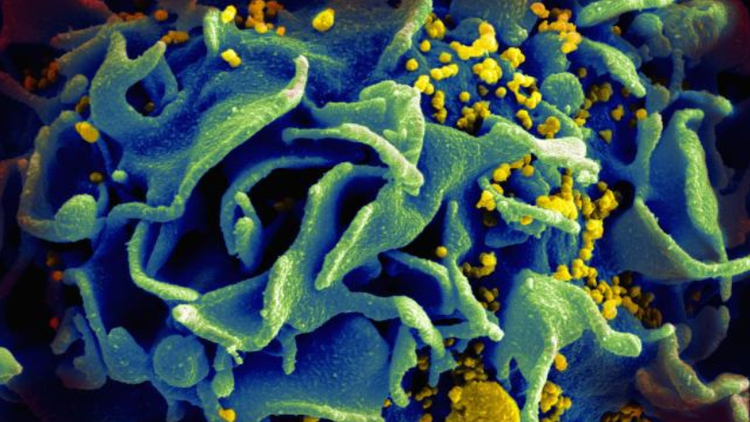 July has been a particularly trying month for HIV/AIDS researchers as they mourned the loss of colleagues killed in a militant attack and received new reports of the virus' remarkable tenacity.
On Monday, a study published in Annals of Internal Medicine found that two HIV patients who were given "new" immune systems in the form of bone marrow transplants suffered renewed HIV infection after initially testing negative for the disease.
Publication of the study follows news this month that the so-called Mississippi baby recently tested positive for HIV. The child, who was born to an infected mother, was placed on antiretroviral drugs just 30 hours after birth and was believed to have been "functionally cured" of the disease. In reality, she had been infected all along.
- Detail
- Kategori: Berita Media (News)
- Dilihat: 3319
Kinggwood News, 20 July 2014
In 2012, Dr. Timothy W. Sloan generated headlines about an issue most churches refuse to discuss, HIV/AIDS, by not only leading an initiative but also getting a rapid HIV test in front of his congregation of 5,000 members. Today, Sloan is still making efforts to bring awareness to this issue by forming a partnership with his church, St. Luke Missionary Baptist Church of Humble (aka The Luke) and with Believers World Outreach (BWO). Through the efforts of this partnership they will be sending a team of six missionaries from their church that includes Jotina Buck, Ashley Buchanan, Amber Smith, Joy Lee, Debra Montgomery and Selma Washington to Cape Town, South Africa for two weeks from July 27 — Aug. 10 to provide relief and support for one of the largest regions affected by the HIV/AIDS epidemic.
- Detail
- Kategori: Artikel Jurnal
- Dilihat: 4129
Adebiyi Adesina[1], Veronika J Wirtz[2],[3], and Sandra Dratler[1]
 Since antiretroviral (ARV) medicines represent one of the most costly compo- nents of therapy for HIV in middle-income countries, ensuring their efficient procurement is highly relevant. In 2008, Mexico created a national commission for the negotiation of ARV prices to achieve price reductions for their public HIV treatment programmes. The objective of this study is to assess the immediate impact of the creation of the Mexican Commission for Price Negotiation on ARV prices and expenditures.
A longitudinal retrospective analysis of procurement prices, volumes and type of the most commonly prescribed ARVs procured by the two largest providers of HIV/AIDS care in Mexico between 2004 and 2009 was carried out. These analyses were combined with 26 semi-structured key informant interviews to identify changes in the procurement process.
- Detail
- Kategori: Artikel Jurnal
- Dilihat: 5530
Rini Sasanti Handayani[1], Yuyun Yuniar[1], dan Ully Adhie Mulyani[2]
Latar belakang
Antiretroviral (ARV) adalah obat HIV–AIDS yang berfungsi mengurangi varemia dan meningkatkan jumlah sel-sel CD4+. Meskipun tidak untuk menyembuhkan, ARV meningkatkan harapan hidup ODHA (orang dengan HIV–AIDS). Tingkat kepatuhan sangat memengaruhi keberhasilan terapi ARV, padahal ARV harus digunakan seumur hidup. Akibatnya sering menyebabkan kebosanan/kejenuhan, dan pada akhirnya menjadi drop out. Pemaknaan ARV oleh ODHA merupakan salah satu faktor yang menentukan kepatuhan ODHA menggunakan ARV.





Informasi
 |
 |
 |
 |



© 2026 Kebijakan AIDS Indonesia