
- Detail
- Kategori Induk: Artikel (Article)
- Kategori: Berita Media (News)
- Dilihat: 3199
New Vission, 28 August 2014
THE deputy Mission Director for the United States Agency for International Development (USAID), Mark Meassick has expressed concern over the high HIV/AIDS prevalence in the police force.
He said the 11.5% HIV/AIDS prevalence in the Police force is high compared to the 7.3% average national prevalence.
"We need to step up the fight against HIV/AIDS prevalence among the military and police, we need them to ensure law and order, they are always there to protect us, they even risk their lives serving the nation," he said.
- Detail
- Kategori Induk: Artikel (Article)
- Kategori: Berita Media (News)
- Dilihat: 3106
Blog AIDS Gov, 28 August 2014
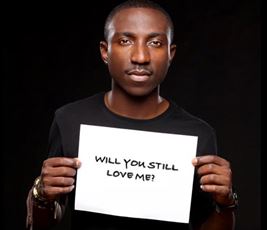 Will you still love me even when you discover my truth?
As someone who has been living with HIV since 2007 and was recently diagnosed as having bi-polar disorder, I understand what it's like to operate from an emotional deficit.
According to the Centers for Disease Control and Prevention, 1 in 4 people will experience a mental health problem within their lifespan, and I happen to be one of them. There has been research Exit Disclaimer that has demonstrated the heightened prevalence of depressive and anxiety disorders among Black gay men. Imagine the added layers of stress one is subjected to after an HIV-positive diagnosis. As AIDS.gov's HIV Basics page on HIV and mental health explains, mental health refers to your emotional, psychological, and social well-being. Your mental health affects how you think, feel, and act, and it also helps determine how you handle stress, relate to others, and make choices. That's important for all people, including people living with HIV. When you have positive mental health, you are often able to function better in life and especially in relationships. You're also often better able to decipher what may be hindering you from experiencing the types of relationships you deserve. When I began to realize that the emotionally fulfilling relationships I desired were escaping me because I hadn't unpacked my "stuff" yet, I subsequently reached out for help, which allowed me to make healthier choices for myself in regards to love and who I allowed in my life intimately.
- Detail
- Kategori Induk: Artikel (Article)
- Kategori: Berita Media (News)
- Dilihat: 2914
Inquirer, 28 August 2014
 MANILA, Philippines—The Department of Health-National Epidemiology Center (DOH-NEC) released a report Thursday stating there were 585 new cases of Human Immunodeficiency Virus and Acquired Immunodeficiency Syndrome (HIV and AIDS) recorded in July.
The July 2014 Philippine HIV and AIDS Registry stated that 36 of the new HIV cases progressed into full-blown AIDS, a disease which weakens the immune system of the affected individual.
The said figure is the highest number of cases recorded in a month, according to the report.
- Detail
- Kategori Induk: Artikel (Article)
- Kategori: Berita Media (News)
- Dilihat: 3283
New Vission, 27 August 2014
The Director General Uganda AIDS Commission, Christine Ondoa has launched a campaign dubbed "Zip up 256" aimed at young people in the fight against HIV/AIDS.
The campaign, which is spearheaded by young HIV/AIDS activists, is intended to reach out to schools and universities using entertainment and testimonies by youth infected with the virus.
"The HIV prevalence rate among the youth is at 4 percent. If we concentrate on them, they will be able to reduce the prevalence rate in the future," Ondoa said, adding that the prevalence broken down between boys and girls is at 1.1 percent.
She further explained that this prevalence however shoots up to 5 percent when girls move to university, saying that they are more vulnerable since they engage in multiple sexual relationships and cross generational sex, the main drivers of new infections.
- Detail
- Kategori Induk: Artikel (Article)
- Kategori: Berita Media (News)
- Dilihat: 3268
Peru This Week, 27 August 2014
 With assistance from the Ministry of Health (Minsa), communities of the Amazonas Region of Peru are receiving an improved approach to the important issue of HIV/ AIDS. Free screening, antiretroviral treatment and prevention programs have been under way since March 2014. Together with the Regional Health Authority of the Amazonas (Diresa), Minsa hopes to implement not just prevention and therapy programs, but to break down common myths and fear of talking about the issue of HIV/ AIDS.
And so far, the communities of the Amazonas Region seem to be receptive to the programs offered.





Informasi
 |
 |
 |
 |




© 2026 Kebijakan AIDS Indonesia